
WaterRower
"Handcrafted wooden water resistance rowing machines with elegant design."
WaterRower Review 2026: Strategic Evaluation
VERDICT
WaterRower is a Challenger in the equipment sector. Their current performance index remains Stable.
Top WaterRower Picks (2)
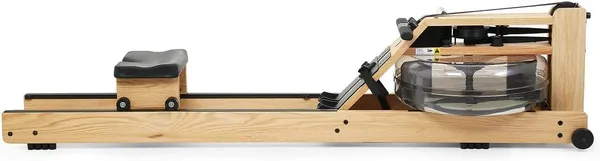
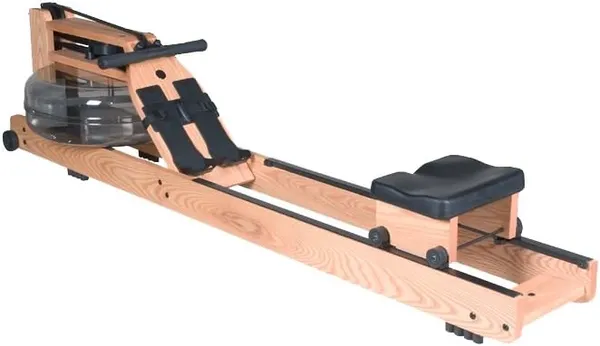
Overall Score
Market Standing
Challenger
Price Positioning
Asset Performance Matrix
Verdict
WaterRower delivers superior build quality and low total cost of ownership for commercial facilities prioritizing durability and user engagement, but lacks digital ecosystem depth required for data-driven operations.
Market Position
Premium niche in water resistance rowing, competing with Concept2 and Ergatta while carving a design-centric segment.
Unique Value Proposition
WaterRower's patented water flywheel creates variable resistance proportional to stroke effort—no magnetic brakes or air dampers. This mechanical simplicity, combined with solid ash hardwood construction, produces a device with 30% fewer components than comparable commercial rowers, directly reducing technician service calls and part replacement costs. The absence of electronics in the rowing mechanism means zero digital obsolescence risk over a 15-year asset lifecycle.
Strategic Strengths
- Monocoque ash wood frame with stainless steel hardware resists oxidation and warping, extending service life beyond 10 years in high-traffic settings.
- Water-based resistance provides natural rowing feel with zero motor wear, reducing mechanical failures and maintenance downtime compared to flywheel or magnetic designs.
- Five-year warranty on frame and drum covers major structural risks, lowering unplanned CAPEX exposure for commercial buyers.
Operational Risks & Limitations
- No integrated display for performance metrics out of the box; requires aftermarket S4 monitor or tablet mount, increasing upfront investment and complexity.
- Water tank requires periodic chlorine tablet dosing and occasional cleaning to prevent algae—ongoing consumable cost absent in air/magnetic rowers.
- Limited workout library and no streaming content library, making it less competitive against Peloton or NordicTrack for engagement-driven users.
Risk Assessment
WaterRower's reliance on wood construction introduces supply chain vulnerability for ash sourcing, potentially raising lead times and costs in volatile timber markets.
Buyer Recommendation
Select WaterRower for hospitality, corporate wellness, or premium studios where aesthetic and tactile experience justify the $350+ premium over Concept2. Avoid if your operation requires analytics, leaderboards, or minimal maintenance overhead.
Best For
- Boutique hotel fitness centers needing a statement piece that doubles as functional equipment.
- Physiotherapy clinics requiring low-impact, natural resistance with patient-friendly operation.
- Corporate onsite gyms prioritizing employee engagement via tactile experience over data tracking.
Ideal Buyer Profile
- Commercial facility managers with CAPEX budgets $2,000+ per unit and a focus on longevity >5 years.
- Wellness directors at luxury spas or country clubs aiming to differentiate equipment lineup.
- Fitness operators with dedicated maintenance staff who can perform quarterly water tank servicing.
Not Recommended For
- High-volume chain gyms relying on standardized fleet maintenance—water tank upkeep conflicts with minimal-touch protocols.
- Data-driven training facilities requiring watt-based interval programming or integration with HR monitors.
- Multi-location franchises needing centralized software control across equipment brands.
Competitive Positioning
Whereas Concept2 dominates durability/analytics and Ergatta leads in gamification, WaterRower occupies the intersection of artisanal build and analog resistance—sacrificing connectivity for mechanical reliability. For B2B buyers, this translates into lower lifetime electricity costs and zero software subscription fees, but higher initial spend per square foot.
Frequently Asked Questions
How often does a WaterRower require maintenance in a commercial setting?
In commercial environments with 50+ daily uses, WaterRower recommends adding a chlorine tablet every 2-3 months to prevent algae, and replacing the belt pulley assembly every 300,000 strokes (roughly 12-18 months under heavy use). The ash frame needs annual wood conditioning if located in humid areas.
Is WaterRower quieter than a Concept2 for shared office gyms?
Yes. The water displacement produces a rushing sound around 45-50 dB during moderate rowing, versus 55-65 dB from a Concept2's air damper. This makes WaterRower ideal for quiet zones, though the splashing may be more audible in acoustically sensitive spaces.
Can WaterRower integrate with Peloton or Zwift for virtual classes?
WaterRower does not natively sync with third-party apps. You can install the aftermarket S4 monitor (sold separately) which sends Bluetooth data to apps like Kinomap or Zwift via a tablet mount, but this adds ~$200 and lacks the seamless experience of brands like NordicTrack or Peloton. Explore peloton as an alternative if app integration is critical.
✓ Strategic Strengths
- Audit criteria met.
! Operational Risks
- No critical risks flagged in current cycle.
Frequently Asked Questions
What is WaterRower?
Handcrafted wooden water resistance rowing machines with elegant design.
How does FitnessNav rate WaterRower?
WaterRower scores 7.0/10 overall in our v3.0 model, which places it as a Challenger among the fitness equipment brands we track. Its strongest dimension is manufacturing quality (7.0/10) and its weakest is manufacturing quality (7.0/10). Overall score = manufacturing quality 25% + R&D innovation 20% + interface UX 20% + capital efficiency 15% + support 10% + tech readiness 10%.
Who is WaterRower best suited for?
Commercial gyms, multi-site operators and studio buyers comparing equipment suppliers. In this segment the decision usually turns on build quality, service life and capital efficiency before list price.
How does WaterRower compare with alternatives?
Our published rankings place WaterRower in 4 best lists, including Best Cardio Equipment Brands and Best Elliptical Machine Brands. Same-sector peers are listed below, each scored on the same six dimensions.
How much does WaterRower cost?
We do not publish price tiers we cannot verify. Verified equipment and software options for WaterRower are listed on this page with live retailer pricing. We may earn an affiliate commission when you buy through those links, and that never influences our scores.
Network Nodes
Related in equipment Sector
Related Equipment Brands
Frequently ranked alongside WaterRower