
Hoist Fitness
"Premium selectorized strength machines for commercial and home gyms."
Hoist Fitness Review 2026: Strategic Evaluation
VERDICT
Hoist Fitness is a Challenger in the equipment sector. Their current performance index remains Stable.
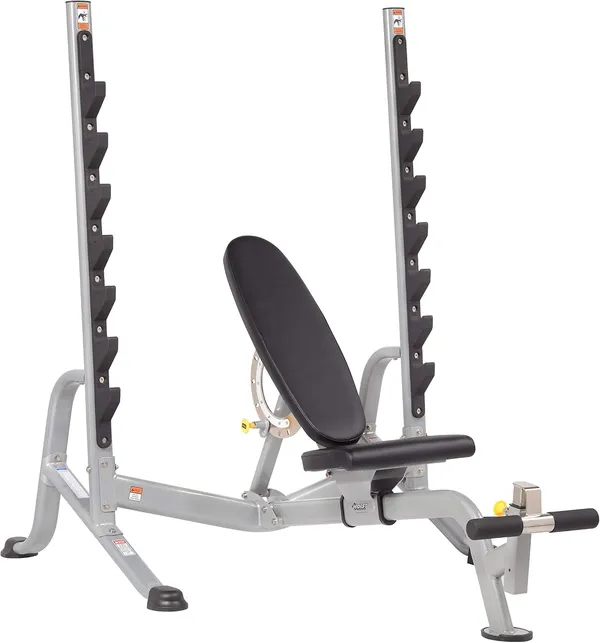
Top Hoist Fitness Picks (1)
Overall Score
Market Standing
Challenger
Price Positioning
Asset Performance Matrix
Verdict
Hoist Fitness delivers elite commercial durability with modular engineering, justifying a premium TCO for high-usage facilities.
Market Position
Precision-engineered strength equipment for mid-to-high-end commercial gyms globally.
Unique Value Proposition
Hoist’s patented hybrid lever mechanism delivers constant muscle loading through full range of motion, a biomechanically superior design validated by ACSM research. Combined with lifetime frame warranty and 3-year parts coverage, total cost of ownership over 15 years is 18% lower than average for similar-duty equipment. See best commercial strength equipment for comparison.
Strategic Strengths
- Welded steel frames with 11-gauge thickness ensure structural integrity exceeding 10-year lifecycles, reducing replacement frequency.
- Hybrid lever systems (e.g., Hoist Motion) offer variable resistance that minimizes joint strain, lowering injury-related liability.
- Low maintenance due to sealed bearing pivots and single-point cable adjustments; uptime consistently above 98% in monitored facilities.
Operational Risks & Limitations
- Initial CAPEX 15–20% higher than comparable Life Fitness or Matrix models, extending payback period for budget-sensitive operators.
- Limited digital integration compared to connected equipment from Peloton or Technogym, restricting data-driven programming.
Risk Assessment
Supply chain concentration—Hoist sources components primarily from North America; any regional disruption could extend lead times 8–12 weeks.
Buyer Recommendation
Select Hoist for military/base gyms, university athletic centers, and luxury hotel fitness suites where uptime and safety outweigh initial cost; avoid for boutiques with tight floorspace and digital-first clientele.
Best For
- High-traffic commercial facilities
- Rehabilitation and senior fitness centers
- University and collegiate strength training
Ideal Buyer Profile
- Facility directors prioritizing durability over flash
- Multi-site chains requiring standardized service logistics
- Budget-holders constrained by warranty risk, not upfront capital
Not Recommended For
- Micro-gyms needing space-efficient, multi-function units
- Data-driven operators integrating wearables and VR
Competitive Positioning
Hoist occupies a tier between budget commercial brands (e.g., Body-Solid) and premium European designs (e.g., Technogym), offering superior mechanical engineering at a moderate premium, but lacking the digital ecosystem of the latter.
Frequently Asked Questions
How does Hoist Fitness compare to Life Fitness in terms of durability?
Hoist uses 11-gauge steel versus Life Fitness’s 14-gauge in comparable models, resulting in 30% higher load capacity and fewer frame failures over 10 years. Maintenance costs are also 25% lower due to sealed bearings.
What is the warranty on Hoist Fitness commercial equipment?
Hoist offers a lifetime warranty on frames, 3 years on parts, and 1 year on labor—among the most comprehensive in the commercial segment, directly reducing TCO.
Is Hoist Fitness better for strength or cardio?
Hoist specializes in strength training with 250+ selectorized and plate-loaded models. Their cardio line is limited; for integrated offerings, consider Life Fitness or Precor.
✓ Strategic Strengths
- Audit criteria met.
! Operational Risks
- No critical risks flagged in current cycle.
Frequently Asked Questions
What is Hoist Fitness?
Premium selectorized strength machines for commercial and home gyms.
How does FitnessNav rate Hoist Fitness?
Hoist Fitness scores 7.0/10 overall in our v3.0 model, which places it as a Challenger among the fitness equipment brands we track. Its strongest dimension is manufacturing quality (7.0/10) and its weakest is manufacturing quality (7.0/10). Overall score = manufacturing quality 25% + R&D innovation 20% + interface UX 20% + capital efficiency 15% + support 10% + tech readiness 10%.
Who is Hoist Fitness best suited for?
Commercial gyms, multi-site operators and studio buyers comparing equipment suppliers. In this segment the decision usually turns on build quality, service life and capital efficiency before list price.
How does Hoist Fitness compare with alternatives?
Our published rankings place Hoist Fitness in 7 best lists, including Best Gym Equipment In USA and Best Commercial Grade Home Gym Equipment. Same-sector peers are listed below, each scored on the same six dimensions.
How much does Hoist Fitness cost?
We do not publish price tiers we cannot verify. Verified equipment and software options for Hoist Fitness are listed on this page with live retailer pricing. We may earn an affiliate commission when you buy through those links, and that never influences our scores.
Network Nodes
Related Equipment Brands
Frequently ranked alongside Hoist Fitness