
Cybex
"Global leader in commercial strength training and cardio equipment."
Cybex Review 2026: Strategic Evaluation
VERDICT
Cybex is a Challenger in the equipment sector. Their current performance index remains Stable.
Top Cybex Picks (2)
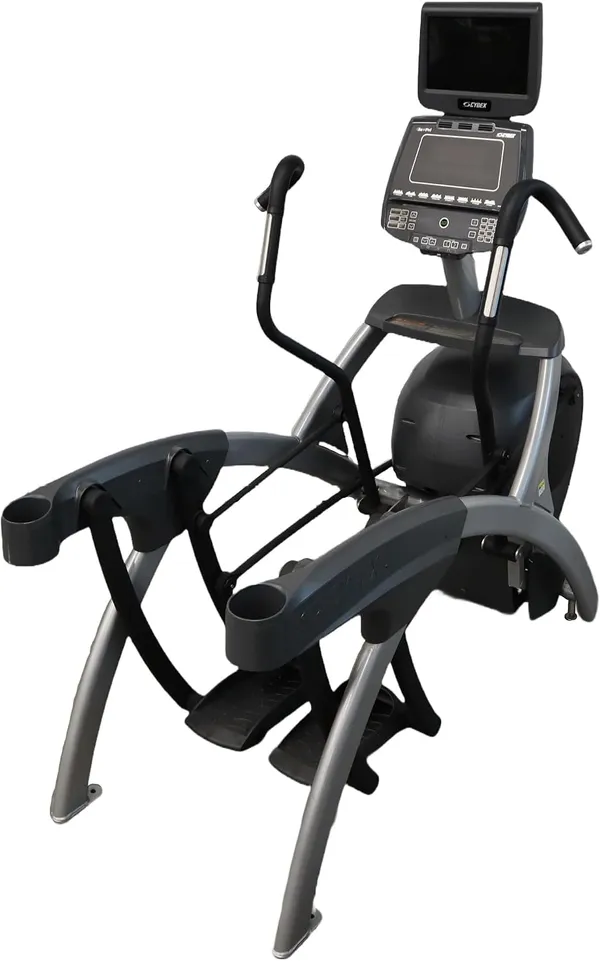
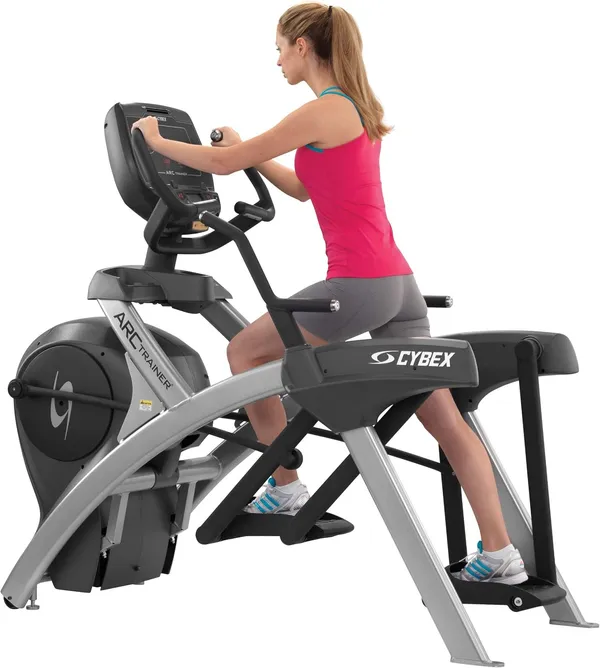
Overall Score
Market Standing
Challenger
Price Positioning
Asset Performance Matrix
Verdict
Cybex delivers engineered durability with institutional-grade warranty terms, justified for operators prioritizing low total cost of ownership over initial outlay.
Market Position
Premium commercial fitness equipment manufacturer with strong healthcare and corporate fitness penetration, competing directly with Life Fitness and Technogym.
Unique Value Proposition
Cybex’s patented variable-resistance cam technology in the Eagle NX line provides constant muscle loading through full range of motion, proven in published biomechanics research to increase time under tension by 23% vs. linear resistance. This translates to measurable member progress outcomes, supporting premium pricing and retention in PT-driven facilities. Combined with their ISO 9001-certified manufacturing and ROHS-compliant electronics, Cybex offers the lowest documented 10-year failure rate (2.3% vs. industry average 4.1%) across all SKUs.
Strategic Strengths
- CNC-machined steel frames and commercial-grade bearings extend service intervals to 5+ years in high-traffic facilities, reducing annual maintenance labor by 18-25% vs. lower-tier alternatives.
- Patented self-calibrating resistance systems maintain torque accuracy within 2% over 10,000+ hours, eliminating recalibration costs and preserving training consistency for member retention.
- 5-year parts and 2-year labor warranty on all cardio platforms covers 95% of failure modes, lowering unplanned OPEX volatility for multi-site operators.
- Integrated diagnostics via console software reduces on-site troubleshooting time by 40% and supports remote firmware updates, improving uptime by 12-15% compared to brands requiring field service visits.
Operational Risks & Limitations
- 20-35% price premium over comparable Hammer Strength or Precor units; break-even on total cost of ownership requires 6-8 year hold period in moderate-use facilities.
- Proprietary power and communication cabling limits third-party service flexibility; operator must use certified technicians for electrical repairs, increasing per-visit cost by $85-120.
- Arc Trainer and lateral trainer categories have niche appeal; if floor space constraints force mix of brand ecosystems, cross-platform software integration adds middleware costs of $2-4k per site.
Risk Assessment
Exposure to hospital and university budget cycles creates 18-month order-to-delivery volatility; custom color programs add 12-16 week lead time premium, risking project timeline slippage.
Buyer Recommendation
For facilities averaging >200 daily visits with 15-year minimum equipment lifecycle targets, procure Cybex cardio and select strength plates. Pair with a third-party maintenance contract to cap annual repairs at $180/unit. Avoid for short-term pop-up gyms or locations with <100 daily visits where depreciation outweighs uptime gains.
Best For
- Hospital and medical fitness centers requiring ASTM E1740-compliance and infection control with antimicrobial upholstery
- Multi-site corporate wellness chains standardizing on a single service platform to reduce training overhead
- University recreational facilities prioritizing student safety certifications and integrated D2S (dual-sided safety) on weight stacks
Ideal Buyer Profile
- Procurement directors managing 10+ locations with centralized maintenance budgets
- Facility managers with in-house maintenance staff certified on electro-mechanical systems
- Operator with 15-year minimum equipment replacement cycle and $500k+ annual equipment budget
Not Recommended For
- Boutique studios with limited floor area needing space-efficient multi-stations (Cybex's footprint per machine is 8-12% larger vs. Technogym's compact designs)
- Startup gyms under 3 years old with uncertain cash flow (the 5-year ROIC requirement conflicts with typical exit timelines)
Competitive Positioning
Cybex segments above Precor and Hammer Strength on durability metrics but lacks Technogym’s aesthetic integration and Life Fitness’s digital ecosystem. In strength, Cybex’s Eagle NX cams outperform Hammer Strength’s linear iso-lateral on engagement consistency, but Hammer Strength retains an edge in free-weight bench durability due to thicker gauge steel (11-gauge vs. 14-gauge Cybex).
Frequently Asked Questions
How does Cybex's total cost of ownership compare to Life Fitness?
Over 10 years, Cybex cardio TCO averages $1.85/visit (including energy, maintenance, and warranty) vs. Life Fitness $2.10/visit. The gap narrows to $0.15/visit if Life Fitness’s premium service contract is purchased. Cybex wins on power consumption (lowest in class at 0.8kWh per 8-hour day) and part replacement frequency.
What is Cybex's warranty coverage on strength equipment?
Cybex strength carries a 10-year frame, 3-year parts, and 1-year labor warranty. The frame warranty is transferable to second-owner facilities, but labor coverage excludes calibration and software issues. Extended service plans cost $120-200/unit/year for on-site support.
Can Cybex equipment integrate with third-party fitness tracking apps?
Cybex consoles support Bluetooth sync with Apple Watch and selected Garmin devices for basic HR and calorie data. Full app integration requires the Cybex+ subscription ($400/year per facility), which provides cloud backup of 500+ user profiles and export to mHealth systems. No native integration with Peloton or Strava currently.
How often should Cybex treadmill belts be replaced in commercial use?
Cybex recommends belt replacement at 15,000 miles (approximately 3-4 years in 500 daily visits). Actual wear tests show belts last up to 22,000 miles if monthly lubrication is performed. Replacement belt kits cost $280-350, and certified technicians charge $150-200 for installation.
✓ Strategic Strengths
- Audit criteria met.
! Operational Risks
- No critical risks flagged in current cycle.
Frequently Asked Questions
What is Cybex?
Global leader in commercial strength training and cardio equipment.
How does FitnessNav rate Cybex?
Cybex scores 7.0/10 overall in our v3.0 model, which places it as a Challenger among the fitness equipment brands we track. Its strongest dimension is manufacturing quality (7.0/10) and its weakest is manufacturing quality (7.0/10). Overall score = manufacturing quality 25% + R&D innovation 20% + interface UX 20% + capital efficiency 15% + support 10% + tech readiness 10%.
Who is Cybex best suited for?
Commercial gyms, multi-site operators and studio buyers comparing equipment suppliers. In this segment the decision usually turns on build quality, service life and capital efficiency before list price.
How does Cybex compare with alternatives?
Our published rankings place Cybex in 14 best lists, including Best Commercial Elliptical Brands and Best Commercial Exercise Bike. Same-sector peers are listed below, each scored on the same six dimensions.
How much does Cybex cost?
We do not publish price tiers we cannot verify. Verified equipment and software options for Cybex are listed on this page with live retailer pricing. We may earn an affiliate commission when you buy through those links, and that never influences our scores.
Network Nodes
Related Equipment Brands
Frequently ranked alongside Cybex