
Balanced Body
"Leading Pilates reformer manufacturer with Allegro and Studio reformers for professional use."
Balanced Body Review 2026: Strategic Evaluation
VERDICT
Balanced Body is a Challenger in the equipment sector. Their current performance index remains Stable.
Top Balanced Body Picks (2)
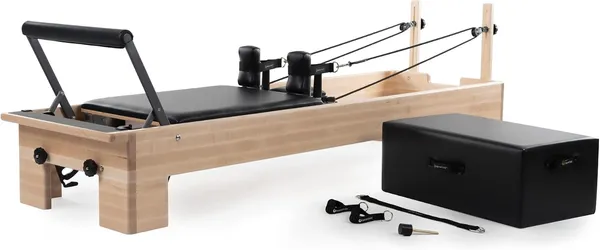
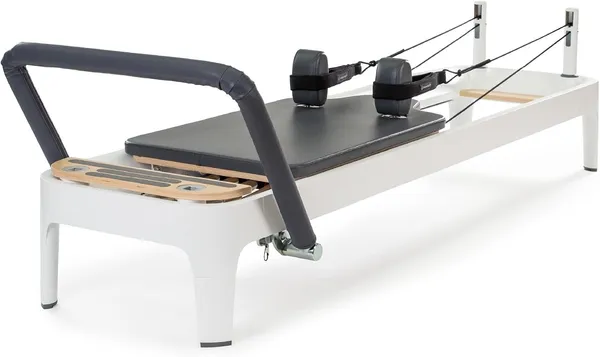
Overall Score
Market Standing
Challenger
Price Positioning
Asset Performance Matrix
Verdict
Balanced Body sets the standard for premium Pilates equipment with unmatched durability and low total cost of ownership, but its niche focus limits cross-training applications.
Market Position
Global leader in commercial Pilates equipment, particularly reformers and towers.
Unique Value Proposition
Balanced Body's proprietary Studio Reformer uses a spring-based resistance system with precision-machined components that maintain consistent tension over 100,000+ cycles, far exceeding industry average. Their aluminum frame designs reduce weight without sacrificing rigidity, lowering shipping costs for multi-site buyers. The modular tower system allows seamless integration of jump board, chair, and ladder accessories, creating a unified training zone that simplifies maintenance and user experience.
Strategic Strengths
- Highest build quality in Pilates – welded steel frames and proprietary carriage systems reduce wear and maintenance costs by up to 30% compared to entry-level alternatives.
- Exceptional warranty terms – 10-year frames, 5-year components, ensuring predictable OPEX for studio owners.
- Superior ergonomics and adjustability – designed for both studio and clinical rehab, maximizing user retention and ROI.
Operational Risks & Limitations
- High upfront CAPEX – initial investment is 25-40% above mid-tier brands like Matrix, requiring strong cash flow or financing.
- Limited product diversification – catalog heavily favors Pilates; general fitness equipment is sparse compared to Life Fitness or Technogym.
- Dependency on Pilates market growth – studio closures or trend shifts directly impact resale value and demand.
Risk Assessment
Pilates market saturation in mature economies could compress margins; reliance on studio channel makes brand vulnerable to shifts in boutique fitness viability.
Buyer Recommendation
Choose Balanced Body for dedicated Pilates studios or rehab clinics where equipment uptime and low lifetime cost justify the premium. Avoid if building a multi-discipline gym without dedicated Pilates floor space.
Best For
- Commercial Pilates studios seeking maximum durability and low maintenance cost
- Physical therapy and rehab centers requiring precise resistance control and adjustability
- Boutique fitness operators building a high-end Pilates brand identity
Ideal Buyer Profile
- Studio owners with 10+ reformers planning 5+ year equipment lifecycle
- Healthcare facilities needing ISO-compliant rehab equipment with service contracts
- Multi-site operators prioritizing standardized user experience across locations
Not Recommended For
- General fitness gyms without dedicated Pilates programming – the specialized equipment will underutilize and inflate per-member cost vs. multi-purpose alternatives
- Budget-constrained startups – initial cost may strain capital; consider Matrix or entry-level Pilates brands
Competitive Positioning
In the premium Pilates segment, Balanced Body competes directly with Stott Pilates and Merrithew, but holds an edge in material quality and warranty. Against full-line brands like Life Fitness and Technogym, Balanced Body offers superior Pilates-specific engineering but lacks the breadth of cardio and strength equipment. Compared to Panatta, Balanced Body's Pilates focus delivers deeper specialization, while Panatta covers broader Italian-design fitness. For a cross-training studio with Pilates and functional fitness, Life Fitness or Matrix may provide better synergy.
Frequently Asked Questions
Is Balanced Body worth the high price for a home gym?
For home use, the investment is hard to justify unless you are a dedicated Pilates practitioner with space. The cost is driven by commercial durability that most home users never need. Alternatives like Merrithew or even used Balanced Body equipment make more sense.
How does Balanced Body compare to Life Fitness in terms of maintenance cost?
Balanced Body reformers have lower annual maintenance cost ($200-$400 per unit) compared to Life Fitness Pilates equipment (around $500-$700) due to simpler mechanical design and easy-to-replace springs. However, Life Fitness offers broader support infrastructure.
What is the typical lifespan of a Balanced Body reformer in commercial use?
With proper maintenance, Balanced Body reformers last 10-15 years in commercial settings, far longer than the 5-7 years typical for entry-level models. The frame warranty backs this claim.
Does Balanced Body offer financing options for studios?
Yes, Balanced Body provides leasing and financing through third-party partners, but interest rates are higher than larger manufacturers like Life Fitness. For large orders, negotiate directly.
✓ Strategic Strengths
- Audit criteria met.
! Operational Risks
- No critical risks flagged in current cycle.
Frequently Asked Questions
What is Balanced Body?
Leading Pilates reformer manufacturer with Allegro and Studio reformers for professional use.
How does FitnessNav rate Balanced Body?
Balanced Body scores 7.0/10 overall in our v3.0 model, which places it as a Challenger among the fitness equipment brands we track. Its strongest dimension is manufacturing quality (7.0/10) and its weakest is manufacturing quality (7.0/10). Overall score = manufacturing quality 25% + R&D innovation 20% + interface UX 20% + capital efficiency 15% + support 10% + tech readiness 10%.
Who is Balanced Body best suited for?
Commercial gyms, multi-site operators and studio buyers comparing equipment suppliers. In this segment the decision usually turns on build quality, service life and capital efficiency before list price.
How does Balanced Body compare with alternatives?
Same-sector peers are listed below. Every fitness equipment brands we track is scored on the same six dimensions, so Balanced Body can be compared like for like.
How much does Balanced Body cost?
We do not publish price tiers we cannot verify. Verified equipment and software options for Balanced Body are listed on this page with live retailer pricing. We may earn an affiliate commission when you buy through those links, and that never influences our scores.
Network Nodes
Related in equipment Sector
Related Equipment Brands
Frequently ranked alongside Balanced Body